-
Gray AcumenERP
Optimizing ERP Performance After Go-Live
Introduction Implementing an ERP system is a major milestone for any organization. After months of planning, configuration, testing, and training, the system finally goes live. Many businesses assume that once the ERP is live, the project is complete. In reality, the go-live stage is only the beginning of the journey. Once real users begin working in the system, new challenges appear. These issues can affect performance, data accuracy, and overall productivity. Without proper support, organizations may struggle to realize the full value of their ERP investment. This is where cloud managed services play a critical role by providing ongoing support, monitoring, and optimization. 1. User Adoption and Process Confusion After go-live, employees often face difficulties adjusting to the new system. Even after training, users may struggle with new interfaces, workflows, and data entry processes. This leads to incorrect transactions, delays, and an increase in support tickets. Managed services provide dedicated support teams that assist users, resolve issues quickly, and offer continuous training. This helps improve user confidence, reduces errors, and ensures smoother daily operations. 2. System Performance and Stability Issues During testing, systems are usually evaluated with limited data and users. After go-live, real transaction volumes increase, and performance issues may arise. Reports may run slowly, integrations may fail, and system response time may decrease. Managed service providers continuously monitor system performance. They identify bottlenecks, optimize configurations, and ensure the system runs efficiently. Proactive monitoring helps prevent downtime and improves overall system stability. 3. Integration Failures with Other Systems Most ERP systems are connected to other applications such as CRM, payroll, banking, or third-party logistics platforms. After go-live, these integrations may face failures due to data mismatches, network issues, or configuration errors. Managed services teams monitor integrations regularly, detect failures early, and resolve them quickly. They also ensure that data flows smoothly between systems, maintaining accuracy and consistency across the organization. 4. Managing Regular Updates and Patches Cloud ERP platforms release frequent updates that include new features, security fixes, and performance improvements. While these updates are beneficial, they can also cause issues with customizations, reports, or integrations if not properly tested. Managed service providers handle patch management by testing updates in advance, identifying potential risks, and ensuring a smooth deployment. This reduces the chances of unexpected system failures after updates. 5. Lack of Internal ERP Expertise Many organizations do not have a large internal ERP support team. Their IT staff may be skilled in general technology but lack deep expertise in specific ERP modules. As a result, complex issues may take longer to resolve. Managed services give organizations access to a team of functional and technical ERP experts. These specialists can quickly diagnose and resolve issues, provide guidance, and support ongoing improvements. Real-World Use Case: ERP Stabilization After Go-Live A global retail company implemented a cloud-based ERP system to manage its finance and inventory operations across multiple locations. Soon after go-live, the company began facing issues with delayed financial reports and frequent inventory mismatches between the ERP and the warehouse system. The internal IT team struggled to identify the root cause, as the issues were related to integration failures and incorrect user configurations. Support tickets increased, and finance teams were unable to close monthly books on time. The company partnered with a cloud managed services provider to stabilize the environment. The managed services team monitored integrations, corrected configuration errors, optimized report performance, and provided user support. Within two months, report performance improved, integration failures were eliminated, and the month-end close cycle was reduced by several days. The organization was able to operate smoothly while the managed services team handled ongoing support and optimization. Business Impact of Managed Services Organizations that adopt managed services after ERP go-live experience several benefits. They see reduced system downtime, faster issue resolution, improved user productivity, and better data accuracy. Managed services also help control IT costs by providing expert support at predictable monthly rates. Conclusion ERP go-live is not the end of the journey. It is the starting point of continuous improvement. Without proper post-go-live support, organizations may face performance issues, user dissatisfaction, and operational risks. Cloud managed services provide the expertise, monitoring, and optimization required to keep ERP systems stable, secure, and efficient. By addressing common post-go-live challenges, managed services help organizations maximize the value of their ERP investment and support long-term business growth. – By Gray Acumen


Modern Oracle Managed Services: More Than Just Support
INTRODUCTION In today’s fast-moving digital economy, enterprise systems are no longer just back-office tools. Oracle ERP platforms such as Oracle E-Business Suite (EBS) and Oracle Fusion Cloud sit at the heart of finance, supply chain, procurement, manufacturing, and human resources. Every sales order, invoice, payroll run, and inventory movement depends on these systems working correctly. For many organizations, Oracle is the single source of truth. When Oracle systems slow down or go offline, business operations feel the impact immediately. Yet many companies still rely on traditional managed services models that were designed for a very different IT world. These older models focus on reacting to problems instead of preventing them. In contrast, modern Oracle managed services are built to keep systems healthy, optimized, and ready for growth. This blog explains the difference between traditional and modern Oracle managed services, and why a proactive, business-focused approach delivers far better results. TRADITIONAL MANAGED SERVICES – A REACTIVE MODEL Traditional managed services usually follow a ticket-based model. When something breaks, a user logs a ticket. The service provider investigates the issue and tries to fix it. Once the issue is resolved, the ticket is closed. While this approach might work for basic IT support, it is not enough for complex Oracle environments. Oracle ERP systems are deeply connected across finance, supply chain, procurement, and reporting. A problem in one area can easily affect many others. Common limitations of traditional managed services include: – Issues are only addressed after users complain – No proactive monitoring of system health – Limited understanding of business processes – Slow response during critical business periods – Repeated problems due to lack of root-cause analysis This leads to frequent disruptions, delayed financial closes, failed batch jobs, and frustrated business users. WHAT MODERN ORACLE MANAGED SERVICES LOOK LIKE Modern Oracle managed services take a completely different approach. Instead of waiting for issues, they focus on keeping the entire Oracle environment stable, secure, and optimized at all times. A modern model includes: – Continuous system and performance monitoring – Proactive identification of potential issues – Regular health checks and system tuning – Patch and upgrade management – Capacity planning for growth and peak demand – Strong understanding of Oracle business processes The goal is not just to keep the system running, but to ensure it supports the business efficiently and reliably. WHY ORACLE ENVIRONMENTS REQUIRE A MODERN APPROACH Oracle platforms are powerful, but they are also complex. A typical Oracle environment includes databases, application servers, interfaces, integrations, custom reports, and security configurations. These components must work together smoothly. In addition, Oracle environments are constantly changing: – Data volumes grow – Users increase – Business processes evolve – Quarterly updates and patches are released – New modules and features are added Without continuous oversight, performance can degrade and risks can increase. A modern managed services approach ensures that Oracle systems stay aligned with business needs. GRAY ACUMEN’S APPROACH TO MANAGED SERVICES Gray Acumen’s managed services are designed around business outcomes, not just technical fixes. Our teams understand how Oracle supports finance, supply chain, and operations, and we manage systems with those business goals in mind. We provide: – Proactive monitoring and issue prevention – Support for both Oracle EBS and Oracle Fusion – Performance and capacity management – Integration and batch job oversight – Security and compliance support – Regular system health reporting Instead of reacting to problems, we work continuously to keep Oracle environments stable and ready for peak business demand. THE BUSINESS IMPACT When organizations move to a modern Oracle managed services model, they see clear benefits: – Fewer system outages – Faster issue resolution – Better performance during peak periods – Reduced risk – Higher user satisfaction – Stronger support for growth and transformation IT teams can shift from firefighting to strategic work, and business leaders gain confidence that their systems will support future plans. FINAL NOTES Oracle ERP systems are too important to be managed with a reactive, ticket-based mindset. Modern Oracle managed services provide a proactive, business-aligned approach that helps organizations reduce risk, improve performance, and get more value from their Oracle investment. By moving beyond basic support, companies turn their Oracle platforms into a true competitive advantage. – Gray Acumen
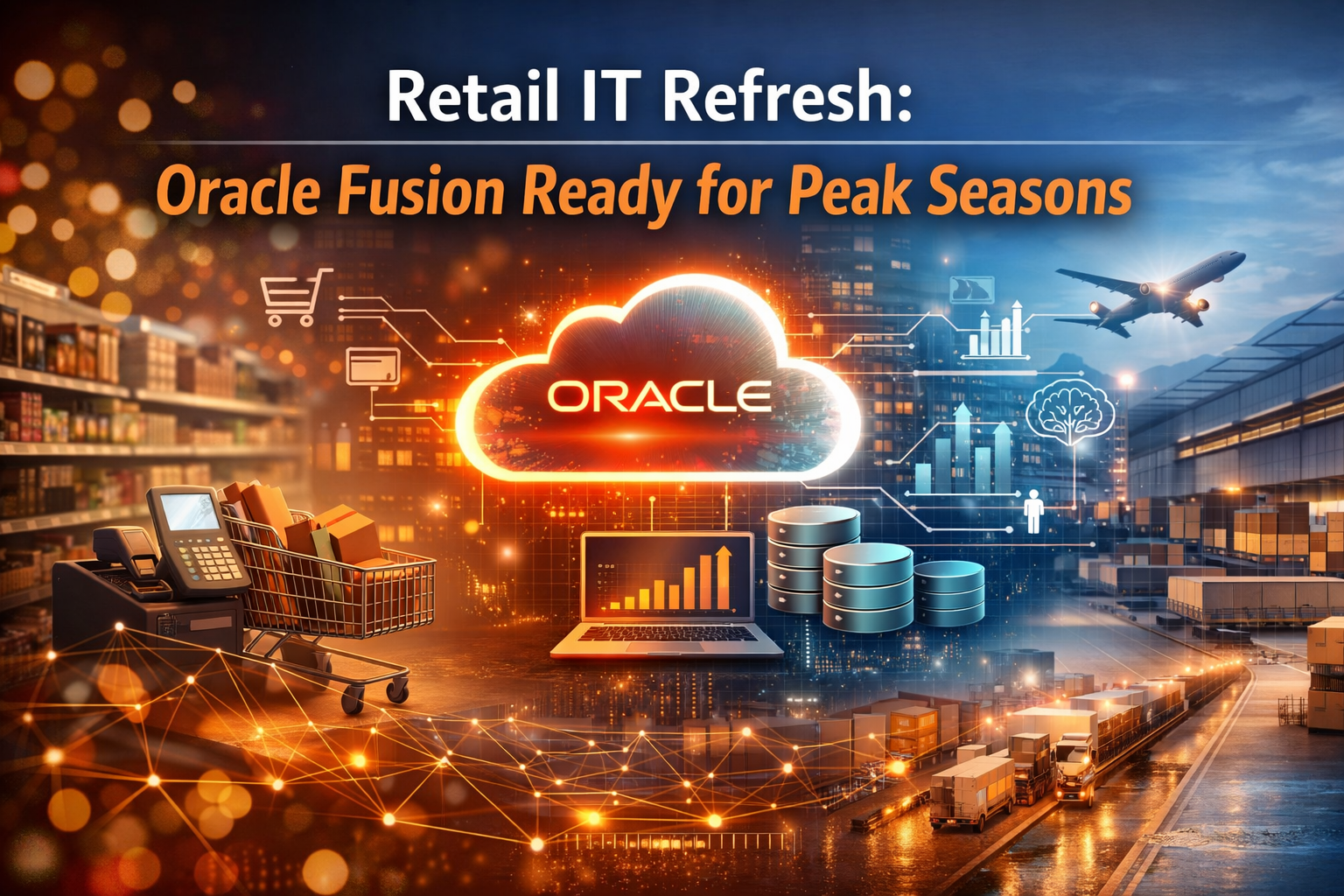
Retail IT Refresh: Oracle Fusion Ready for Peak Seasons
INTRODUCTION Retail organizations operate within one of the most demanding and interconnected IT ecosystems. Large retail chains manage thousands of daily transactions across physical stores, warehouses, e-commerce platforms, suppliers, logistics partners, and financial systems. Any disruption in this ecosystem directly affects revenue, customer experience, and operational efficiency. As retail businesses expand, IT environments become layered with customizations, integrations, data growth, and new business processes. Over time, even well-performing systems can struggle under increased load. This is why a yearly IT refresh is not just an operational task, but a strategic necessity—especially for retail organizations heavily dependent on Oracle E-Business Suite (EBS) and increasingly adopting Oracle Fusion Cloud. WHY YEARLY IT REFRESH IS CRITICAL FOR RETAIL CHAINS Retail IT systems support nearly every core business function:• Store and POS operations • Finance, accounting, and compliance • Supply chain, inventory, and procurement • Order management and fulfillment • Warehousing and logistics • Reporting, analytics, and forecasting Retail environments also experience sharp seasonal spikes driven by holidays, promotions, and market expansions. Without regular IT refresh cycles, systems gradually lose their ability to scale, resulting in performance bottlenecks, processing delays, and operational risk. A yearly IT refresh enables retail leaders to proactively assess system health, capacity, and readiness for the year ahead. ORACLE EBS AS THE BACKBONE OF RETAIL IT Despite cloud adoption trends, Oracle E-Business Suite continues to serve as the backbone of many retail organizations. EBS supports mission-critical operations including:• General Ledger, Accounts Payable, and Accounts Receivable • Inventory, Purchasing, and Supplier Management • Order Management and Shipping • Manufacturing, Costing, and BOMs Because these processes run continuously and at scale, EBS performance and stability directly influence business continuity. For most retailers, yearly IT refresh is still primarily driven by EBS system health. MANDATORY ORACLE EBS AREAS TO REVIEW DURING YEARLY IT REFRESH A structured yearly IT refresh must include detailed review of the following EBS components: Database and Infrastructure:• Database performance, patching, and growth trends • Index optimization and statistics collection Concurrent Manager and Batch Processing:• Throughput during peak periods • Queue balancing and job scheduling Customizations and Extensions:• Forms, workflows, and reports • Impact of custom code on upgrades and performance Interfaces and Integrations:• Batch interfaces, inbound/outbound data flows • Error handling and recovery processes Data Management:• Archival and purge strategies • Storage growth and historical data handling Security and Compliance:• User roles, access controls, and audit readiness • Segregation of duties Backup and Disaster Recovery:• Recovery time objectives • High availability readiness ORACLE FUSION READINESS IN MODERN RETAIL IT As retailers modernize, Oracle Fusion Cloud is increasingly adopted for finance, SCM, analytics, and planning. Fusion environments must handle:• High transaction volumes • Large user concurrency • Near real-time integrations • Frequent quarterly updates Fusion readiness is now a critical part of yearly IT refresh planning, ensuring cloud environments remain stable and scalable as business demand grows. FUNCTIONAL AREAS TO REVIEW IN ORACLE FUSION During yearly IT refresh, the following Fusion functions require mandatory review: • Financials: Close cycles, batch processing, and reporting • SCM: Inventory accuracy, procurement, and order management • Integrations: Oracle Integration Cloud and APIs • Analytics: OTBI, BI Publisher, and dashboards • Security: Role design and access governance • Scheduled Jobs: ESS job execution and queue behavior WHAT IS UAR AND WHY IT IS ESSENTIAL A Usage Assessment Request (UAR) is Oracle’s formal mechanism to evaluate whether a Fusion Cloud environment is properly sized for business transaction volumes. UAR validates system capacity, concurrency, and performance thresholds. For retail organizations with seasonal demand spikes, UAR is essential to:• De-risk UAT and volume testing • Prevent job queuing and system slowdowns • Align expectations between IT, business, and Oracle UAR requests should be initiated four to six weeks before major milestones such as peak seasons, promotions, or go-live events. AI READINESS AND THE ROLE OF UPGRADES Oracle continues to embed AI and machine learning capabilities across Fusion applications, including demand forecasting, anomaly detection, intelligent insights, and conversational interfaces. To fully leverage these AI-driven capabilities, retailers must:• Stay current with Oracle quarterly updates • Maintain clean and consistent master data • Ensure stable and real-time integrations • Align security roles to support AI access • Optimize reporting and analytics foundations Delaying upgrades limits access to AI innovations and reduces the overall return on Oracle investments. FROM REACTIVE MAINTENANCE TO PROACTIVE READINESS Retail IT refresh programs must evolve beyond reactive maintenance. Systems must be continuously assessed for performance, scalability, and future capability enablement. A yearly IT refresh that balances Oracle EBS stability with Oracle Fusion innovation allows retailers to operate confidently while preparing for digital transformation. CONCLUSION For large retail chains, yearly IT refresh is no longer optional. It is a strategic discipline that ensures Oracle EBS remains stable, Oracle Fusion environments are ready for scale, AI capabilities are enabled, and peak-season risks are minimized. Retail success depends on IT systems that are not only operational today but resilient and future-ready for tomorrow. – Gray Acumen
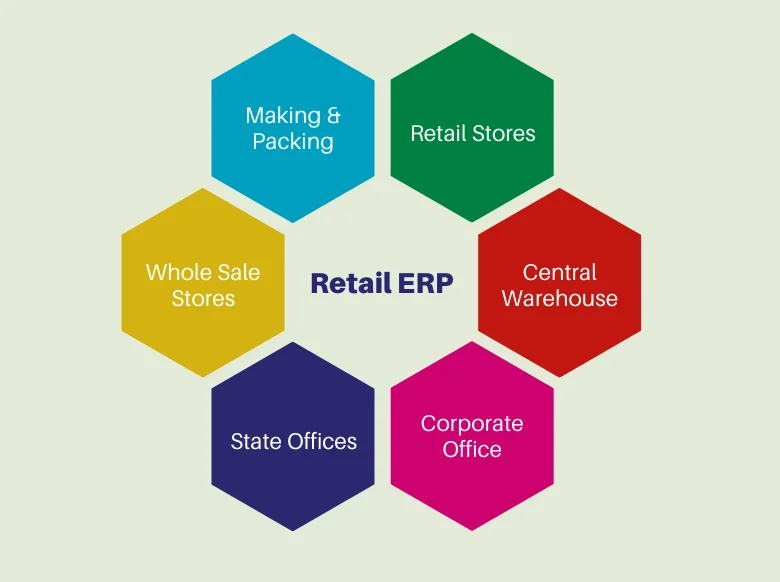
How Cloud ERP Helps Retailers Manage Rapid Growth
Retail is evolving faster than ever. Whether it’s expanding into new locations, launching ecommerce channels, onboarding new suppliers, or managing seasonal spikes — retailers today face continuous pressure to scale without sacrificing customer experience. But as growth accelerates, so do the challenges: This is exactly where Cloud ERP becomes a game-changer for modern retail brands. What Is Cloud ERP for Retail? Cloud ERP (Enterprise Resource Planning) is a unified platform that connects all key retail functions — from finance and inventory to procurement, operations, and supply chain. Instead of separate systems working independently, Cloud ERP provides one connected system that grows with the business Why Retailers Need Cloud ERP During Rapid Expansion 1.Real-Time Inventory Visibility Across All Channels When retailers scale, inventory quickly becomes the biggest challenge.Cloud ERP gives real-time visibility into: This helps retailers:✔ Prevent stockouts✔ Avoid overstocking✔ Improve order fulfillment accuracy✔ Support omnichannel models like BOPIS (Buy Online, Pick Up in Store) 2. Streamlined Operations With One Unified System Growing retailers often face messy, disconnected systems — POS, eCommerce, accounting, spreadsheets, supplier portals. Cloud ERP eliminates the chaos by integrating everything into a single platform. This means:✔ Faster decisions✔ Fewer manual errors✔ Smooth operations across locations✔ Better collaboration between teams 3. Improved Supplier & Procurement Management As a retailer grows, supplier management becomes complex. Cloud ERP helps by: This ensures every store gets the right products at the right time. 4. Financial Control for Multi-Location Retail Operations Rapid growth = complex finances.Cloud ERP gives complete financial visibility with: Retailers can analyze performance by: ✔ Store ✔ Product category ✔ Region ✔ Promotion or campaign This helps leadership make smarter investment decisions. Final thoughts Rapid retail growth is exciting — but without the right systems, it can quickly become chaotic. Cloud ERP provides the foundation retailers need to scale confidently.It brings together finance, inventory, suppliers, logistics, and operations into one intelligent ecosystem. Whether you’re expanding your offline presence, boosting e-commerce, or going omnichannel, Cloud ERP ensures your business stays agile, efficient, and ready for the future. – Gray Acumen

Why 2025 is the Ideal Moment to Upgrade Your ERP System
With Oracle being one of the best ERP systems available, it’s crucial to understand why now is a great time to rethink your current setup. Sole Focus:Instead of worrying about network stability, data security, or back-end systems, you deserve to focus on building your company. Ideally, companies shouldn’t give their ongoing operations a second thought- it’s expected we should have 100% confidence that all systems work and function effortlessly. That’s what’s anticipated in 2025. “_____” says Senior Oracle Implementation Engineer +12 years of experience, Gray Acumen “_____” says ERP Solutions Architect +10 years of experience, Gray Acumen Following the implementation of a new order management system in its Flooring North America division, Mohawk Industries had severe operational difficulties at the very start of 2025. Clients and employees within were negatively affected by the implementation’s extensive shipping delays and billing failures. The Crucial Lesson Here? Failure to have correctly scheduled, integrated, and guided ERP transitions by experts could do more damage than good .So that you can 100% remain focused on accomplishing your tasks, reaching your goals, and expanding without constraints, you require complete assurance that your data is safe, your systems are integrated, and everything is running at optimal efficiency. Let’s compare your business to the human body. Let us think of it as this, your ERP system is the brain and nervous system that maintains everything to be active, connected, and organized, while the main software symbolizes the body’s functions and operations. A successful ERP system combines finance, operations, supply chain, and client data, allowing your business to run swiftly, accurately, and effectively, much like your nervous system enables your body to move properly and respond in real time. We want to make sure that our business’s internal systems, such as our ERP and tech infrastructure, remain in good shape and designed to thrive, just as we strive to keep our bodies strong and healthy. Avoid Waiting for a Mistake! All too frequently, businesses wait to upgrade their ERP until their current system starts not working properly, which delays communication, causes challenges with compliance, or disrupts operations. In fact, your ERP platform is most likely holding you back even before you are aware of it! To have optimal efficiency, your software needs to work in this new environment and be highly modified to avoid being out of date. Before issues emerge, UPGRADE. Make proactive choices and change the way your business operates with the assistance of specialists who handle this on a daily basis. What’s the Verdict? At Gray Acumen, we believe 2025 is a pivotal year, companies that make the proper ERP infrastructure investments now are setting themselves up for success in the future. Let’s have a conversation! With the expertise and assistance your company requires to thrive, Gray Acumen is prepared to guide you with upgrading your ERP.
Why 2025 Is the Ideal Time to Upgrade Your ERP System
Discover why 2025 is the perfect year for your ERP upgrade. Learn how Oracle ERP modernization helps businesses achieve efficiency, security, and scalability with expert guidance from Gray Acumen. Why 2025 Is a Turning Point for ERP Modernization As technology advances, businesses can no longer afford outdated systems that slow down operations. With Oracle ERP leading the way as one of the most reliable enterprise solutions, this year presents the perfect moment to upgrade your ERP system. The modern business environment demands resilience, agility, and seamless integration. Companies should be focusing on growth—not worrying about backend issues like security, compliance, or performance bottlenecks. By end of this year, the expectation is clear: your ERP should work flawlessly in the background, enabling your business to thrive without disruptions. Find below what experts in the industry says: “Businesses need to trust their ERP as much as they trust their finance team—it must simply work, every single day.” – Nitin Ajmera, CFO, NYSC “An ERP upgrade isn’t just about technology—it’s about enabling your business to be agile, resilient, and future-ready.” – Scott Archila, VP, 1800Flowers.com A Costly Lesson: The Importance of Expert ERP Implementation At the start of this year, Mohawk Industries faced major setbacks after deploying a new order management system in its Flooring North America division. Instead of improving operations, the poorly executed rollout led to: The lesson? ERP transitions must be strategically planned, expertly integrated, and guided by specialists. When mishandled, they create more problems than they solve. When managed correctly, they unlock efficiency and long-term growth. ERP: The Nervous System of Your Business Think of your business as a human body: The ERP system is the brain and nervous system—managing data, processes, and real-time communication. The applications are the muscles and organs—carrying out daily operations. Just as a healthy nervous system ensures the body performs smoothly, a modern ERP system connects finance, operations, supply chain, and customer data into one unified platform. With the right ERP solution, your business runs faster, smarter, and more efficiently—just like a healthy body reacting in real time. Why You Shouldn’t Wait to Upgrade Your ERP Too many businesses wait until their ERP system starts failing—causing delays, compliance challenges, and costly downtime. The reality? Your legacy ERP might already be holding you back. Without modernization, you risk: Proactive ERP upgrades are always less expensive and more effective than reactive fixes. The competitive edge belongs to businesses that act early and invest in future-ready ERP systems this year. The Gray Acumen Advantage At Gray Acumen, we believe this year is a pivotal year for ERP transformation. With decades of combined expertise in Oracle ERP implementation, migration, and support, our team ensures: What’s the Verdict? Companies that upgrade their ERP system this year are setting themselves up for a stronger, smarter, and more resilient future. Don’t wait for failure—make the proactive choice today. Let’s Start the Conversation At Gray Acumen, we’re ready to guide your ERP upgrade journey. From planning and integration to long-term support, we provide the expertise you need to thrive. Contact us today to explore how Oracle ERP modernization can future-proof your business. – Gray Acumen

Why Smart Companies Invest in ERP Integration
Integrating ERP systems can be a complex and time-consuming task for businesses of all sizes. From aligning multiple departments to ensuring data consistency and system compatibility, ERP integration challenges are a constant struggle. In this post, we’ll explore some of the most common integration challenges that businesses face—and why smart companies choose to invest in ERP integration to overcome them and future-proof their operations. ERP Integration: A Competitive Edge in the Digital Age As industries shift toward automation and cloud-first strategies, businesses with disconnected systems fall behind. ERP integration provides a unified view of your operations, enabling smarter forecasting, faster workflows, and stronger compliance. It’s not just about keeping up—it’s about staying ahead. Key Signs Your Business Needs ERP Integration You use multiple disconnected software systems Your teams spend too much time on manual data entry Inventory, sales, and finance data are hard to reconcile You face delays in decision-making due to outdated data Your current systems can’t scale with your growth “Smart companies don’t just buy software—they build systems that think, scale, and adapt. That’s what ERP integration delivers, and that’s what we build at Gray Acumen.” Admin At Gray Acumen, we specialize in end-to-end ERP implementation and integration. Whether it’s Oracle Cloud, NetSuite, or Salesforce, our solutions ensure that your systems speak the same language—delivering clarity, consistency, and control across your business. Contact us today to start your ERP transformation journey.

The Future of ERP: Trends Driving Digital Transformation
The world of ERP is evolving faster than ever. As businesses navigate digital transformation, emerging technologies like AI, cloud computing, and real-time analytics are reshaping how ERP systems are built and used. In this post, we’ll explore the key trends driving the future of ERP and why investing in modern ERP solutions is essential for staying ahead of the curve. The Future of ERP: Embracing Digital Transformation Enterprise Resource Planning (ERP) systems are evolving rapidly, shaping the future of business operations. Digital transformation powered by ERP brings seamless integration, real-time data, and smarter decision-making. Modern ERPs are no longer just software—they are intelligent platforms driving innovation, agility, and growth across industries. Key Trends Shaping ERP’s Digital Evolution Cloud-based ERP solutions enabling flexibility and scalability Integration of AI and machine learning for predictive analytics IoT connectivity for enhanced asset and supply chain management Mobile ERP access empowering remote and on-the-go teams Advanced automation streamlining finance, HR, and operations “ERP is the backbone of digital transformation. At Gray Acumen, we leverage cutting-edge ERP technologies to help businesses unlock new levels of efficiency and insight.” Admin Gray Acumen partners with leading ERP platforms like Oracle Cloud, SAP, and Microsoft Dynamics to deliver tailored digital transformation strategies. Our solutions help you future-proof your operations, improve collaboration, and drive sustainable growth in an ever-changing marketplace.
Recent Post