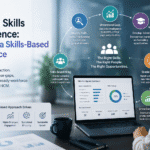
From Skills Gaps to Skills Intelligence: How Oracle Fusion HCM Is Transforming Workforce Planning
Introduction
The workforce is changing faster than traditional workforce planning models can keep up. Digital transformation, artificial intelligence, changing job roles, and evolving business requirements are creating a growing need for organizations to understand not only how many employees they have, but also what skills those employees have and which capabilities the business will need next.
This shift is particularly relevant in the Middle East. The UAE, for example, is experiencing rapid growth in demand for AI-related capabilities. According to PwC’s 2026 AI Jobs Barometer, the share of UAE job postings requiring AI skills increased from 1.0% in 2021 to 3.2% in 2025. The report also found that AI-exposed occupations are experiencing significant changes in their skill requirements, reinforcing the importance of continuous upskilling and reskilling.
For organizations, this creates a fundamental workforce planning challenge. Traditional planning often focuses on headcount, positions, hiring plans, and historical workforce data. Modern planning increasingly requires a more detailed understanding of skills: which capabilities exist today, where the gaps are, how skills are changing, and how employees can be developed to meet future business needs.
This is where skills intelligence becomes important.
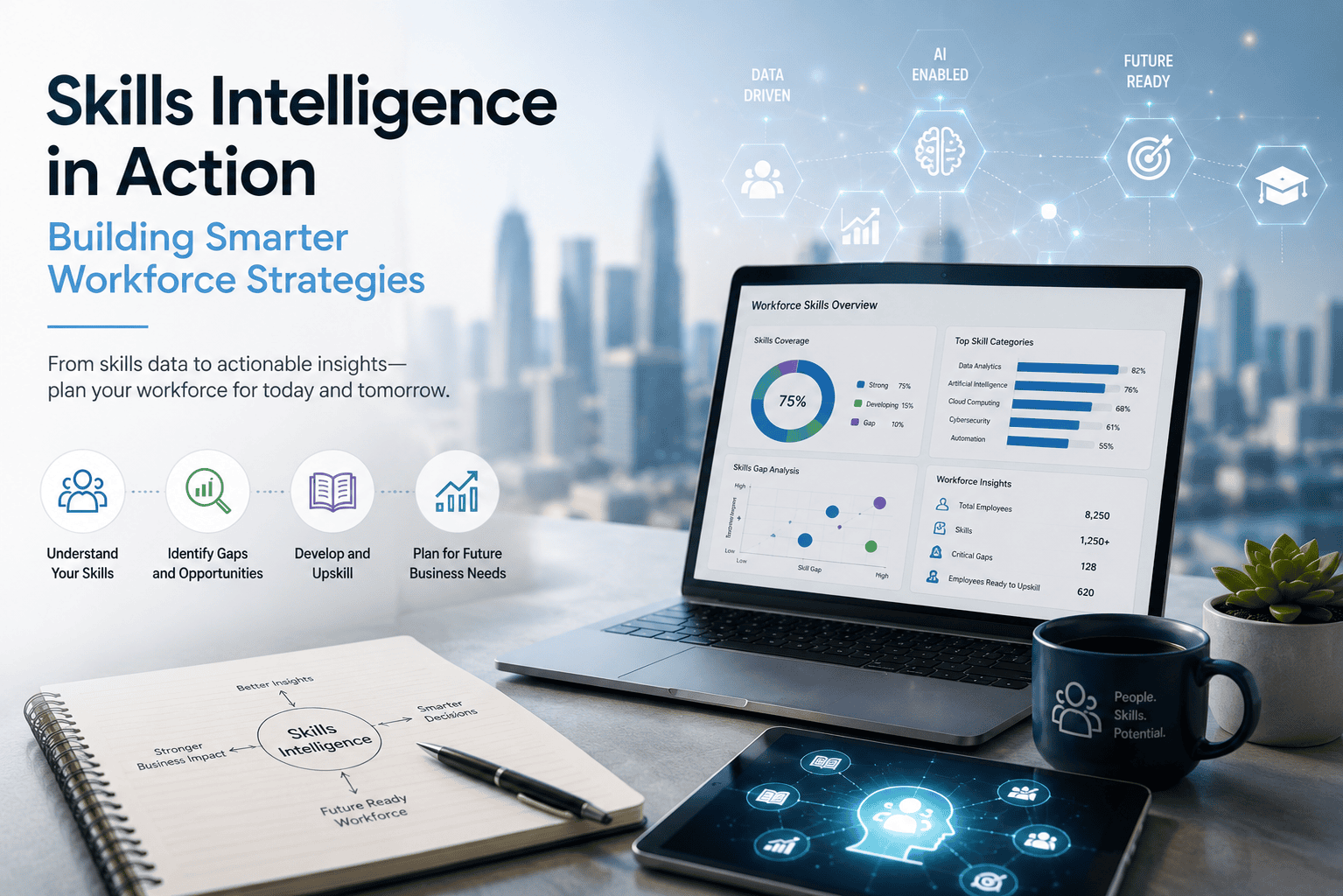
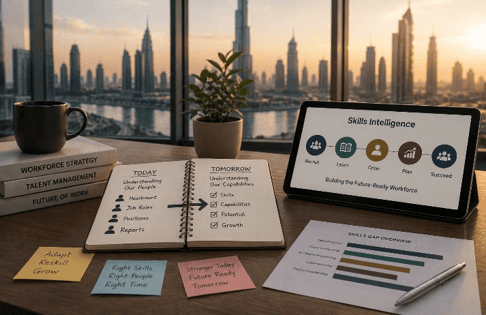
Oracle Fusion Cloud HCM, through capabilities such as Oracle Dynamic Skills, combines skills data with recruiting, learning, career development, workforce planning, and talent management to help organizations move toward a more skills-based approach to workforce strategy.
The Shift From Skills Gaps to Skills Intelligence
A skills gap occurs when an organization does not have enough of the capabilities required to achieve its current or future business objectives.
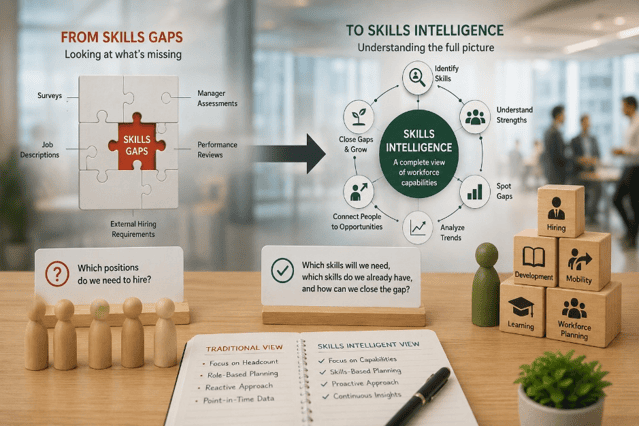
Historically, organizations have identified these gaps through employee surveys, manager assessments, job descriptions, performance reviews, and external hiring requirements. While these methods remain valuable, they can provide only a partial picture.
Skills intelligence takes a broader approach.
Instead of asking:
“Which positions do we need to hire?”
organizations can begin asking:
“Which skills will we need, which skills do we already have, and how can we close the gap?”
This distinction changes workforce planning from a primarily headcount-based activity into a capability-based strategy.
Oracle Dynamic Skills is designed around this concept. Oracle describes it as a way to create a continuously updated view of workforce skills, helping organizations identify strengths, gaps, and trends and connect people with opportunities.
For HR and business leaders, this can provide a more detailed understanding of workforce capability and support better decisions around hiring, development, mobility, and workforce planning.
Why Traditional Workforce Planning Is No Longer Enough
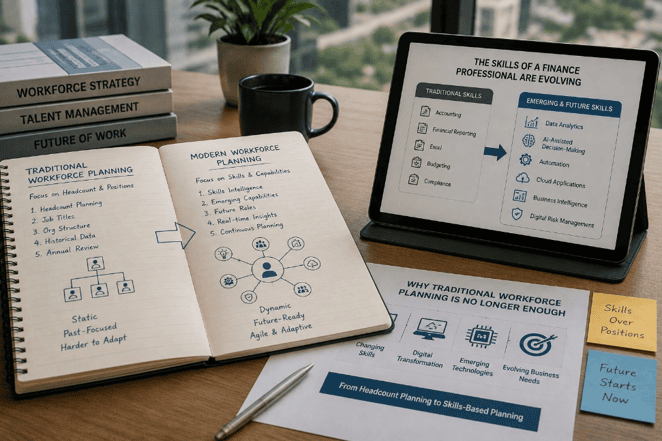
Traditional workforce planning remains important, but rapidly changing skills requirements are making static models harder to maintain.
A position may have the same title while the skills required to perform it change significantly.
For example, a finance professional may increasingly need skills in:
- Data analytics
- AI-assisted decision-making
- Automation
- Cloud applications
- Business intelligence
- Digital risk management
Similarly, an HR professional may need to understand workforce analytics, AI-enabled recruiting, employee experience platforms, and skills-based talent management.
If organizations rely only on historical job descriptions, they may overlook these changes.
Oracle’s 2026 Strategic Workforce Planning guidance emphasizes that organizations need a forward-looking approach to anticipate future talent and skills requirements rather than relying only on reactive hiring. Oracle connects strategic workforce planning with workforce analytics, Dynamic Skills, learning, recruiting, and internal mobility.
Building a Single View of Workforce Skills
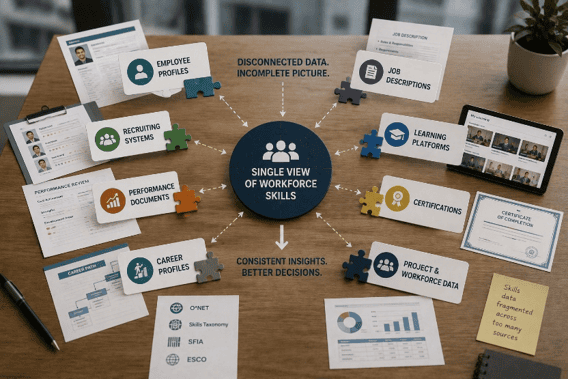
One of the biggest challenges in skills-based workforce planning is data fragmentation.
Skills information may exist across:
- Employee profiles
- Job descriptions
- Recruiting systems
- Learning platforms
- Performance documents
- Certifications
- Career profiles
- External skills libraries
- Project and workforce data
When this information is stored across disconnected systems, organizations can struggle to develop a consistent picture of workforce capabilities.
Oracle Dynamic Skills provides a common skills language and a single source of skills information. It can also enrich the skills library using Oracle and external transactional data, helping organizations build a more current skills profile.
This foundation matters because workforce intelligence is only as useful as the data behind it.
A consistent skills framework can help organizations compare current capabilities with future requirements and identify where targeted action is needed.
AI Is Changing How Organizations Understand Skills
Artificial intelligence is becoming an important part of skills management.
Instead of relying entirely on employees or managers to manually maintain skills profiles, AI can help identify, infer, and recommend relevant skills based on available organizational data.
Oracle Dynamic Skills uses organizational data to automatically identify, infer, and recommend skills for people, jobs, and other skills-related resources.
Oracle has also introduced enhanced skills suggestions using generative AI. In its 26A release, Oracle described the new generative-AI-based suggestions as more relevant and contextual than the previous predictive-AI approach. Oracle has announced that customers using the legacy predictive model need to transition to the enhanced approach before the 26B release.
This evolution is important because skills are not static.
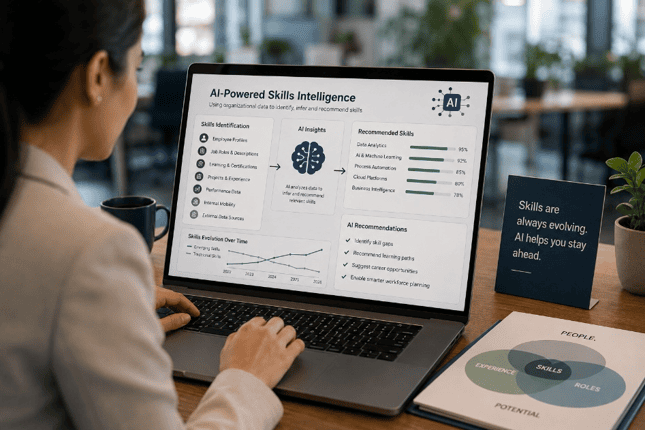
A skill that was considered highly valuable several years ago may become less important, while new capabilities can emerge quickly as technology and business models change.
AI can help organizations keep their understanding of workforce capabilities more current.
From Skills Intelligence to Strategic Workforce Planning
Skills intelligence becomes especially valuable when it is connected to workforce planning.
Imagine an organization preparing to expand its use of cloud technology and AI.
A traditional workforce planning approach may identify a need to hire a certain number of technology professionals.
A skills-based approach can go further.
It can help leaders understand:
- Which relevant skills already exist internally
- Which employees have adjacent or transferable skills
- Which capabilities are missing
- Which employees could be reskilled
- Which positions require external hiring
- Which learning programs can address specific gaps
- Which future roles may require new skill combinations
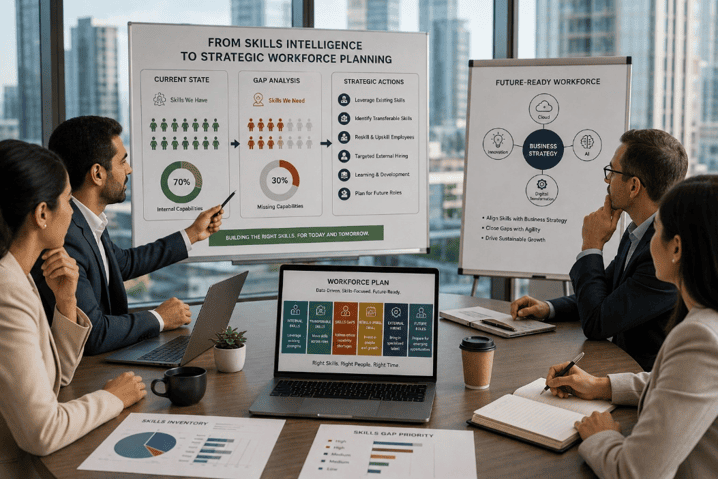
This allows organizations to make more informed decisions before automatically turning every skills gap into a recruitment requirement.
Oracle’s strategic workforce planning approach connects workforce analytics and Dynamic Skills with Learning, Recruiting, and Opportunity Marketplace to help organizations identify gaps and execute workforce plans through hiring, upskilling, and internal mobility.
Connecting Skills With Learning and Upskilling
Identifying a skills gap is only the first step.
The real value comes from taking action.
If an organization identifies a shortage of data analytics capabilities, for example, it can determine whether the gap should be addressed through external hiring, internal mobility, or employee development.
Oracle Dynamic Skills connects skills intelligence with learning and development. Oracle describes skills-driven learning as a way to recommend relevant development opportunities based on business objectives and an employee’s career aspirations.
This creates a continuous cycle:
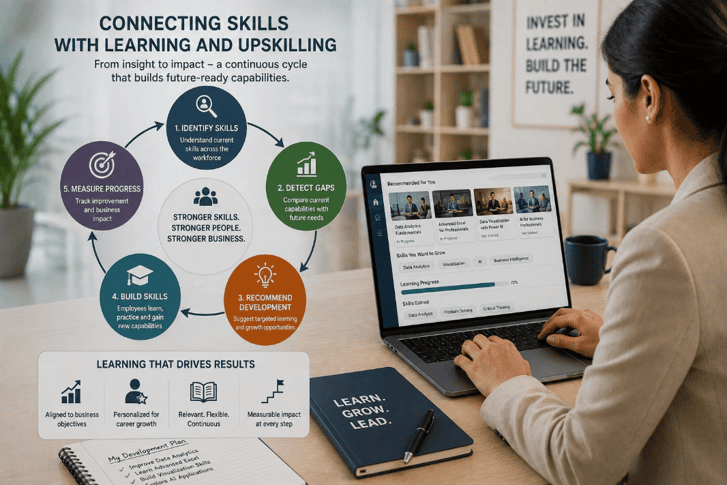
Identify Skills → Detect Gaps → Recommend Development → Build Skills → Measure Progress
Instead of treating learning as a separate HR activity, organizations can connect development directly to business capability requirements.
Skills-Based Recruiting and Internal Mobility
Not every skills gap requires external recruitment.
Organizations may already have employees with adjacent capabilities who can move into new roles with targeted development.
This is where skills-based internal mobility can create significant value.
Oracle’s Dynamic Skills capabilities support skills-informed recruiting as well as career mobility. Employees can discover career opportunities based on their current and developing skills, while organizations can improve talent utilization by connecting people with relevant opportunities.
This approach can help organizations reduce unnecessary external hiring while giving employees clearer career pathways.
The Middle East Perspective
Skills intelligence is particularly relevant to Middle East organizations as regional economies continue to diversify and invest in technology, AI, cloud platforms, and digital services.
The UAE provides a strong example. PwC’s 2026 analysis found that the country’s AI-related job share increased substantially between 2021 and 2025, while AI-exposed occupations experienced broader changes in the skills they require. The report highlights the need for organizations to understand changing roles and build talent pipelines for an AI-enabled economy.
For Middle East enterprises, this means workforce planning increasingly needs to account for:
- Rapid technology adoption
- AI and automation
- Digital transformation
- Multinational workforces
- Skills shortages
- Internal mobility
- Continuous reskilling
- Changing regulatory and business environments
Organizations that can identify capability gaps earlier can take action before those gaps become business constraints.
Why Data Quality Matters
Skills intelligence depends heavily on reliable workforce data.
If employee profiles are outdated, job descriptions are inaccurate, or skills are recorded inconsistently, the resulting insights may not accurately represent the organization’s capabilities.
This is why organizations need strong data governance alongside AI-enabled skills management.
A successful skills strategy should establish:
- Clear ownership of skills data
- Consistent skills definitions
- Regular profile updates
- Appropriate access controls
- Data quality monitoring
- Governance for skills taxonomies
- Integration between HCM and related enterprise systems
Oracle’s Dynamic Skills capabilities include a skills library, skills management, open skills aggregation, transactional data enrichment, and multilingual support, helping organizations establish a more consistent skills foundation.
How Gray Acumen Can Help Organizations Build a Skills-Driven HCM Strategy
Moving from traditional workforce planning to skills intelligence requires more than enabling a technology feature.
Organizations need to align people, processes, data, integrations, and technology.
Gray Acumen can support organizations across their Oracle Fusion HCM journey, including HCM implementation, talent management, integration strategy, analytics, workforce optimization, testing, and managed services.
A well-designed HCM environment can help organizations establish the foundation required to understand workforce capabilities, connect skills with business objectives, and continuously adapt to changing talent requirements.
The goal is to help organizations move from simply managing employees to building a more agile, skills-aware, and future-ready workforce.
Conclusion
The workforce planning conversation is changing.
Organizations can no longer rely solely on headcount forecasts, job titles, and historical hiring patterns to prepare for the future. They need a clearer understanding of the skills they have, the skills they lack, and the capabilities they will need next.
This is the transition from skills gaps to skills intelligence.
Oracle Fusion HCM can support this shift by bringing skills data together with recruiting, learning, career development, workforce analytics, and strategic workforce planning. When these capabilities are connected, organizations can make more informed decisions about hiring, reskilling, internal mobility, and future workforce requirements.
For businesses across the Middle East, where technology adoption and AI-related workforce demand are accelerating, skills intelligence can become more than an HR capability—it can become a strategic advantage.
The future-ready workforce will not simply be the workforce with more people. It will be the workforce with the right skills, continuously evolving with the business.
-by grayacumen