Securing Oracle Fusion HCM Integrations in the Middle East: Best Practices for Modern Enterprises
Introduction
Digital transformation is reshaping businesses across the Middle East. Countries such as the United Arab Emirates (UAE), Saudi Arabia, Qatar, and Bahrain are investing heavily in cloud technologies, artificial intelligence (AI), and enterprise applications to modernize business operations. Human Resources is one of the key functions leading this transformation, with organizations moving away from legacy HR systems toward cloud-based Human Capital Management (HCM) platforms.
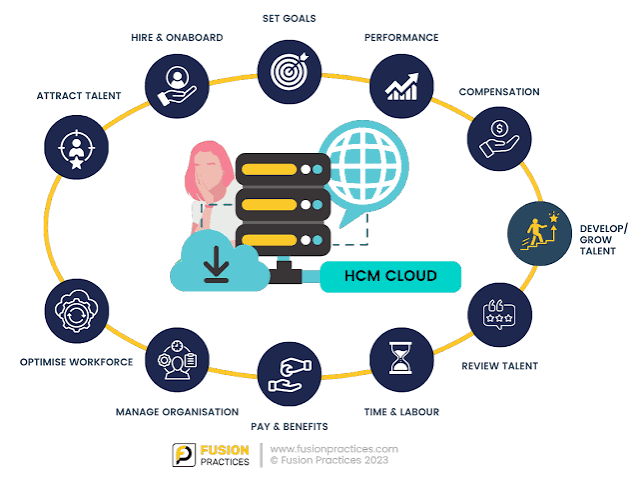
Oracle Fusion HCM has emerged as one of the leading enterprise solutions for managing recruitment, onboarding, payroll, workforce planning, talent management, learning, and employee experience. However, modern organizations no longer use Oracle Fusion HCM as a standalone application. Instead, it acts as the central HR platform that connects with multiple enterprise systems through secure APIs and cloud integrations.
As organizations increase these integrations, they also increase the responsibility of protecting employee data, maintaining compliance, and ensuring secure communication between business applications. A successful Oracle Fusion HCM implementation is no longer just about deploying software—it is about building a secure, scalable, and well-governed digital ecosystem.
Oracle Fusion HCM Adoption Is Accelerating Across the Middle East
The Middle East is experiencing rapid digital transformation driven by government initiatives such as UAE Digital Government Strategy, Saudi Vision 2030, and various smart city programs. These initiatives encourage organizations to adopt cloud-first technologies, automate business operations, and improve workforce productivity.
As businesses expand across multiple countries and manage increasingly diverse workforces, traditional HR systems struggle to meet modern business requirements. Oracle Fusion HCM addresses these challenges by providing a unified cloud platform that supports the entire employee lifecycle while enabling organizations to standardize HR processes across multiple locations.
Several factors are driving Oracle Fusion HCM adoption across the region:
- Growing investment in cloud-based enterprise applications
- Expansion of multinational organizations
- Increasing demand for AI-powered HR capabilities
- Hybrid and remote workforce management
- Workforce analytics and real-time reporting
- Improved employee self-service experiences
- Digital compliance and governance requirements
Oracle Fusion HCM enables HR teams to move beyond administrative tasks and focus on strategic workforce planning through automation, analytics, and intelligent decision-making.
Why Integrations Have Become Essential
Today’s HR environment extends far beyond a single application. Organizations rely on multiple enterprise systems that must communicate with each other to provide accurate, real-time information.
Oracle Fusion HCM is commonly integrated with:
- Payroll systems
- Biometric attendance devices
- Banking and salary payment platforms
- ERP and finance applications
- Recruitment platforms
- Learning Management Systems (LMS)
- Identity and Access Management (IAM) solutions
- Government portals
- Employee collaboration tools
These integrations eliminate duplicate data entry, reduce manual work, improve reporting accuracy, and create a seamless employee experience across the organization.
For example, when a new employee joins the company, Oracle Fusion HCM can automatically trigger the creation of payroll records, employee identities, email accounts, learning assignments, and access permissions across multiple systems. Without integration, each of these activities would require manual intervention, increasing both workload and the risk of errors.
Common Integration Technologies
Organizations use several technologies to connect Oracle Fusion HCM with other enterprise applications. The choice of technology depends on business requirements, existing IT architecture, and security policies.
Common integration technologies include:
- Oracle Integration (OIC)
- REST APIs
- SOAP APIs
- Oracle HCM Cloud Adapter
- HCM Data Loader (HDL)
- Secure File Transfer (SFTP)
- Event-driven integrations
- Middleware platforms
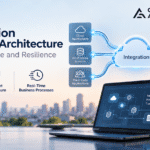
Oracle Integration provides a centralized platform that simplifies application connectivity while reducing development effort. It supports prebuilt adapters, workflow automation, monitoring, and secure communication between cloud and on-premises systems.
Modern API-based integrations also enable organizations to exchange real-time employee information while maintaining high availability and scalability.
Security Challenges in Oracle Fusion HCM Integrations
While integrations improve efficiency, they also expand the organization’s security perimeter. Every new API connection introduces additional risks that must be carefully managed.
Employee information stored within Oracle Fusion HCM includes personal identification details, salary information, banking information, tax records, performance evaluations, and other sensitive data. Unauthorized access to this information can result in financial loss, reputational damage, and regulatory violations.
Some of the most common security challenges include:
- Weak API authentication
- Excessive user permissions
- Poor identity management
- Insecure service accounts
- Data leakage during integration
- Third-party application vulnerabilities
- Limited monitoring and auditing
- Compliance with regional privacy regulations
Organizations operating in the Middle East must also consider evolving data privacy laws and organizational security policies while designing integration architectures.
-by grayacumen